
Simplify
Mindful & Slow Living Coaching
Create a calmer, more intentional way of living by designing your environment, routines, pace, and daily rhythms to better support your well-being.
This work is about designing the conditions of daily life so calm, presence, and intentional living are easier to sustain.
Rather than treating mindfulness as something you practice only during meditation—or slow living as simply doing less—we look at how your environment, schedule, routines, habits, and self-care can support the way you actually want to live.
The goal is to create a life with more space, greater awareness, fewer unnecessary demands, and more room for the people, experiences, and values that matter most to you.
What Is Mindful Living?
Mindful living is the practice of bringing greater awareness and presence into everyday life. It means paying attention to what is happening within you and around you—your thoughts, emotions, physical sensations, surroundings, and experiences—without immediately judging or reacting to them.
Rather than moving through the day on autopilot, mindful living invites you to slow your attention down enough to notice what is actually happening in the present moment. This awareness creates space to respond with greater intention instead of simply reacting out of habit, stress, or urgency.
Mindfulness can be practiced through meditation, breathing exercises, mindful eating, movement, time in nature, or simply giving your full attention to an ordinary moment. Over time, these practices can help you feel more grounded, present, and connected to your own life.
At its heart, mindful living is about being where you are while you are there—experiencing your life more fully instead of constantly rushing ahead to the next thing.
What Is Slow Living?
Slow living is an intentional approach to the pace and priorities of everyday life. It is not about doing everything slowly or withdrawing from responsibility. It is about making more deliberate choices about how you spend your time, energy, and attention.
Instead of allowing urgency, overcommitment, or constant productivity to determine the rhythm of your days, slow living encourages you to create more space for what matters most. That may mean simplifying your schedule, reducing unnecessary obligations, setting healthier boundaries with technology, spending more time in nature, choosing quality over quantity, or making room for meaningful relationships and restorative activities.
Slow living invites you to step away from the pressure to always do more and instead ask whether the way you are living reflects your values, priorities, and well-being.
At its heart, slow living is about choosing a pace and rhythm of life that allows you to live more intentionally, rather than simply keeping up.
How Mindful and Slow Living Work Together
Mindful living is about how present you are within your life.
Slow living is about how intentionally you shape the pace and rhythm of your life.
Together, they help you become more aware of how you are living while also giving you permission to make deliberate changes to the way your days are structured.
Mindfulness helps you notice. Slow living helps you choose.
One strengthens your ability to be fully present in the life you have; the other helps you create a life with more space for what matters most.
What Are the Benefits of Mindful and Slow Living?
When mindfulness and slow living become part of everyday life, the benefits can reach far beyond simply feeling less rushed.
By becoming more present and more intentional about how you spend your time, energy, and attention, you can begin to create a daily life that feels calmer, more grounded, and more aligned with what matters most to you.
Less Stress and Greater Calm
Mindful and slow living can help reduce the constant sense of urgency that comes from moving too quickly, doing too much, or feeling pulled in too many directions. Creating more space in your routines and bringing greater awareness to the present moment can make it easier to pause, reset, and respond rather than react.
A Deeper Connection With Yourself and Others
When you are less distracted and more present, you have more opportunity to notice what you need, what you value, and how you want to show up in your relationships. Greater presence can support more meaningful conversations, stronger connection, and a deeper appreciation for the people and experiences already in your life.
More Intentional Choices
Slow living encourages you to look at how you are spending your time and energy and ask whether those choices reflect your actual priorities. Mindfulness helps you notice what is working and what is not. Together, they can help you make more deliberate decisions about your schedule, commitments, habits, environment, and boundaries.
Greater Support for Your Well-Being
Mindful routines, restorative movement, time in nature, nourishing meals, adequate rest, and intentional self-care can all become part of a lifestyle that supports your physical and emotional well-being. Instead of treating wellness as one more thing to fit into an already crowded schedule, it becomes part of the way your life is designed.
More Joy in Everyday Life
One of the quieter benefits of mindful and slow living is learning to notice and enjoy ordinary moments again. A meal, a walk, a conversation, a favorite hobby, or a few quiet minutes can become more meaningful when you are fully present for them.
Ultimately, mindful and slow living are about creating the conditions for a life that feels more spacious, intentional, connected, and genuinely your own.
Elements of Mindful and Slow Living
Mindful and slow living are not abstract ideas. They show up in the small choices and rhythms of everyday life.
Mindful Routines
A mindful morning or evening routine can create a calmer beginning or ending to the day. This might include meditation, journaling, gentle movement, prayer, or simply enjoying a quiet cup of tea without distractions.
Intentional Time Management
Slow living invites you to be more deliberate about how you spend your time. That may mean saying no to unnecessary commitments, creating more margin in your schedule, or protecting time for the people, activities, and responsibilities that matter most.
Mindful Consumption
Living intentionally can also shape what you bring into your life. Mindful consumption means paying attention to what you buy, use, watch, read, and surround yourself with—and choosing what genuinely supports your values and well-being.
Slow and Mindful Eating
Meals can become an opportunity to slow down and reconnect with the present moment. Eating more mindfully means noticing flavors, textures, hunger, fullness, and the experience of the meal itself rather than rushing through it or eating on autopilot.
Nature Connection
Spending time outdoors can help interrupt the pace and noise of everyday life. A walk, time in a garden, sitting beneath a tree, or simply noticing the changing seasons can create space for presence, perspective, and restoration.
Mindful Technology Use
Technology can support our lives, but constant connectivity can also create distraction and urgency. Mindful technology use means creating boundaries around screens, notifications, and digital habits so technology serves your life instead of continually pulling your attention away from it.
Meaningful and Restorative Activities
Mindful and slow living also make room for activities that help you feel more connected to yourself and your life—gardening, cooking, reading, creative hobbies, music, yoga, walking, meditation, or simply spending unhurried time with people you care about.
The goal is not to create another list of things you are supposed to do. It is to discover the rhythms, practices, and choices that help you feel more present, less rushed, and more connected to the life you want to be living.
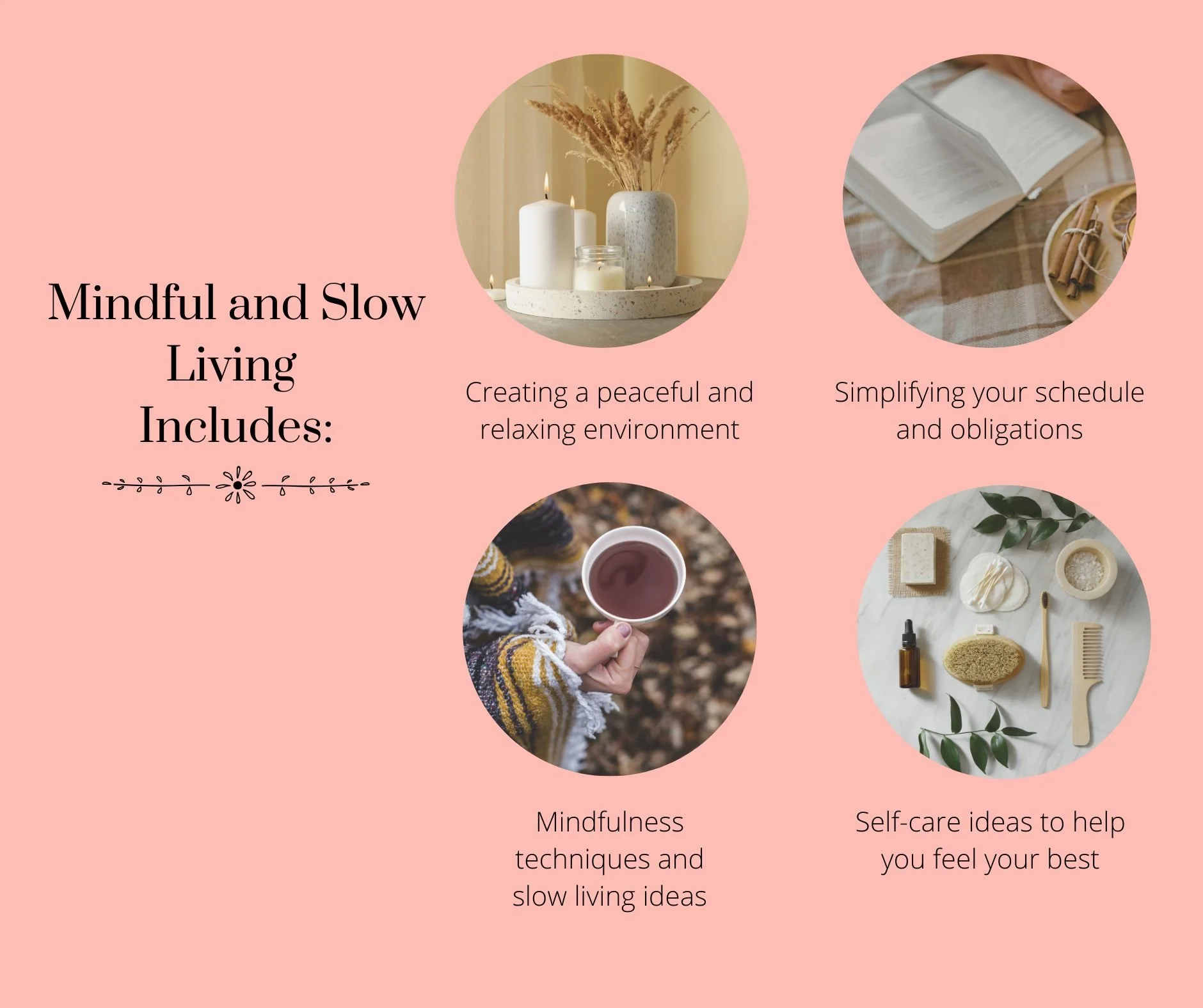
Four Focus Areas for Mindful and Slow Living
This coaching approach is designed around four focus areas that help you shape daily life in a way that supports greater calm, presence, and intentionality.
The goal is not to create a perfect lifestyle or give you another set of rules to follow. It is to look at the parts of everyday life that most influence how you feel and function, then make thoughtful changes that help the life you want feel easier to live.
Creating a Peaceful Environment
Your surroundings can have a powerful effect on how you feel. A space that feels cluttered, chaotic, uncomfortable, or overstimulating can create background stress that makes it harder to relax, focus, or feel settled.
Together, we can look at the spaces you spend the most time in and identify what may be creating unnecessary visual, physical, or sensory noise. This might involve decluttering, organizing, creating more functional spaces, reducing distractions, or simply making your environment feel more inviting and restorative.
The goal is not a picture-perfect home. It is to create surroundings that support the way you want to feel and live.
Simplifying Your Life
A calmer life is not only about your physical surroundings. Your schedule, commitments, routines, and expectations can create just as much clutter as the things around you.
We can look at where your time and energy are going and identify what feels unnecessarily complicated, draining, or out of alignment with your priorities. That may mean simplifying routines, reducing commitments, creating more realistic schedules, setting boundaries, planning meals or household tasks, or building small systems that make everyday life easier to manage.
Simplifying creates room—for rest, relationships, meaningful work, creativity, and the things you want more of in your life.
Mindfulness and Slow Living Practices
Mindfulness helps you become more present within your life. Slow living helps you become more intentional about the pace and shape of that life.
Together, we can explore practices that help you slow your attention, notice what you are experiencing, and engage more fully with ordinary moments. This may include meditation, breathing practices, mindful movement, time in nature, creative activities, technology boundaries, mindful eating, or simply learning to do one thing at a time with greater awareness.
The goal is not to move through life at an artificially slow pace. It is to create enough space to experience your life rather than constantly rushing through it.
Self-Care and Restoration
Self-care is not an extra task to squeeze into an already full life. It is part of creating a life that is sustainable.
Together, we can identify the forms of care that genuinely restore you and find realistic ways to make them part of your regular rhythm. That might include rest, movement, time outdoors, hobbies, nourishing meals, reading, journaling, creative expression, spiritual practices, connection with others, or simply creating more space to be still.
The goal is to build restoration into the way you live so you are not continually waiting until you are exhausted to take care of yourself.
Create a Life That Feels Easier to Live
Mindful and slow living are not about escaping responsibility or creating a perfect life. They are about making thoughtful choices that support the way you want to feel, function, and live each day.
Together, we can look at what is creating unnecessary noise, pressure, or complexity and begin shaping a daily life with more space for calm, presence, restoration, and what matters most to you.
You do not have to change everything. Sometimes a few intentional changes in your environment, schedule, routines, or self-care can begin to shift the way your whole day feels.
This May Be a Good Fit for You If…
You are craving a calmer, more intentional way of living but are not sure how to create it within the realities of your current life.
You may feel overwhelmed by clutter, schedules, responsibilities, technology, or the constant pressure to keep up. Or you may simply want to be more present, make more thoughtful choices, and create daily rhythms that better reflect your values and priorities.
Ready to Create a Calmer, More Intentional Way of Living?
You do not have to overhaul your life to begin making meaningful changes.
If you are ready to create more space, reduce unnecessary pressure, and build daily rhythms that better support your well-being, I would be glad to explore what that could look like with you.
Book a complimentary discovery call to talk about what you are looking for and whether this coaching feels like the right fit.