
Mindful Living: The ADHD Edition
Create your sanctuary, reclaim your peace

The Mindful Space: Beyond the Physical and Mental Clutter
Why an organized home is the foundation of a regulated nervous system
You’ve felt it before: the heavy, buzzing tension that creeps in when your counters are piled high with uncompleted projects, your inbox is an overwhelming wall of unread alerts, and your self-care has devolved into survival mode.
For a high-achieving ADHD adult, a cluttered or disjointed environment isn’t a lack of discipline or an aesthetic problem—it’s a severe biological drain. Because an ADHD nervous system processes sensory data and executive demands with intense depth, every unfinished task, pile of mail, or misplaced item acts as a "micro-stressor." This triggers chronic ADHD paralysis and keeps your body in a state of low-level "high alert," leaving you feeling "wired but tired" and entirely unable to rest, even in your own home.
The Science of Your Sanctuary
When we simplify your surroundings and reorganize your life, we aren't trying to force your brain into rigid, neurotypical minimalism. We are removing the invisible friction and hidden sensory triggers that cause executive burnout. By curating a customized space that acts as a physical exhale for your specific neurology, we transition your home from a source of constant overstimulation into a true Sensory Sanctuary.
How We Build Your Sanctuary:
The External Exhale: We move through your home to identify the "silent loads"—the specific visual noise and clutter-heavy bottlenecks that trigger your stress response—and replace them with anchors of intuitive safety.
Architecting Ease: We don't organize for standard magazine looks; we organize for neuro-affirming executive health. We build low-friction "Landing Zones" that accommodate object permanence, signaling to your fast-moving brain that it is safe to transition into a state of deep rest.
The Ritual of Care: We weave supportive habits into the very fabric of your day. By stripping away rigid expectations, we create the literal "spaciousness" your body needs to practice somatic release and break the exhausting cycle of ADHD burnout.
The Why
For a high-achieving professional with ADHD, a chaotic or unpredictable environment isn’t just an eyesore; it’s a relentless, silent drain on your cognitive battery. Your nervous system is hyper-vigilant, constantly scanning your surroundings for signals of ease or friction. A disorganized home sends a persistent, loud "unfinished" loop to your brain. This keeps your internal alarm system on low-simmer, contributing to that heavy, paralyzing feeling where you can never truly relax or turn your mind off, even when you are sitting on your own sofa.
When we simplify your surroundings using neuro-affirming systems, we are actually lowering your baseline cortisol. By removing the visual noise and high-friction obstacles that trigger your stress response, we allow your brain to stop "triaging" your space and start entering a state of genuine recovery. This transition transforms your home from a source of background anxiety into a Sensory Sanctuary—a place that acts as a physical exhale for your nervous system and protects your limited daily executive energy.
The How
We begin by Architecting Ease within your daily flow. This isn't about perfection or strict compliance; it’s about strategically auditing your space to remove the "micro-stressors" that cause executive dysfunction—like poor lighting, digital friction, and schedules that invite demand avoidance. We create intuitive, highly visible organization and rhythmic systems that do the heavy lifting for you, ensuring your environment supports your nervous system health rather than demanding your constant attention.
Finally, we weave The Ritual of Care into your newly simplified world. By clearing out the physical and mental clutter, we create the spaciousness required for true, dopamine-friendly self-care to take root. You will learn to use your environment as a somatic tool—utilizing scent, sound, lighting, and texture to manually signal safety and calm to your body. This allows you to move through your day with steady, sustainable momentum, anchored in a home that actively supports your mental and emotional health.
What Is Mindful Living?
Mindful living for the ADHD brain is a way of moving through life that prioritizes calm, emotional steadiness, and intentionality—both within yourself and in the environment you create around you. It’s about designing a life that doesn’t keep your nervous system on edge, but instead allows you to feel safe, settled, and at ease in your own space without having to mask your natural traits. When you’re living mindfully, you’re no longer frantically rushing from one hyper-focus session to the next or experiencing choice paralysis over what needs your attention. Instead, you’re able to be fully present—whether that’s quietly sipping your morning tea, noticing the colors of a sunset, or simply sitting in a room that feels physically supportive and easy to maintain. Mindful living includes flexible, restorative self-care practices that help regulate your body and mind, allowing you to move through your days with greater clarity, steadiness, and a deeper sense of enjoyment in the moment.
What Is Slow Living?
Slow living for the neurodivergent nervous system is the practice of intentionally choosing a pace of life that supports your well-being rather than depleting your limited dopamine reserves. It’s not about performing every task slowly—it’s about removing unnecessary, artificial urgency so you can experience your life more fully. Slow living invites you to simplify your schedule, your space, and your commitments so there is room to breathe, think clearly, and bypass the overwhelm of decision fatigue. It allows you to move through your day with presence instead of high-pressure anxiety—creating space to enjoy simple moments, nurture fluid routines, and engage in activities that feel genuinely grounding and fulfilling. At its core, slow living is about quality over quantity, helping you build a life that feels calm, spacious, and deeply aligned with how your unique brain actually operates.
Where Mindful Living and Slow Living Meet
Mindful living and slow living are not separate ideas—they work together to create a way of life that feels calm, grounded, and intensely intentional.
Mindful living brings sensory awareness to how you experience your life in each moment—your thoughts, your body, and your surroundings. Slow living supports that awareness by removing the constant pressure to rush, overcommit, and operate at an unsustainable, neurotypical pace.
Together, they shift you out of chronic ADHD reactivity and into sovereign choice.
Instead of moving through your days on autopilot, responding to every external demand and falling into executive paralysis, you begin to move with clarity and intention. Your environment becomes supportive rather than overstimulating. Your schedule reflects your true energetic capacity instead of your masking obligations. And your daily routines begin to feel restorative rather than draining.
This combination creates something many high-achieving women with ADHD haven’t experienced in a long time: a sense of internal calm that isn’t temporary—but built directly into the infrastructure of how you live. It’s not about escaping your responsibilities. It’s about engaging with your life from a place of steadiness, presence, and control.
The Benefits of Mindful and Slow Living
For people navigating ADHD, the benefits of this way of living go far beyond basic stress reduction—they completely transform how you manage your executive function and show up in every area of your life.
Sustained Calm Instead of Constant Pressure
When your environment, habits, and pace of life support your nervous system, you no longer operate in a constant state of fight-or-flight urgency. You feel more grounded, less reactive to rejection or frustration, and better able to handle challenges without hitting a wall of burnout.
Clearer Thinking and Better Decision-Making
A cluttered space and an overloaded schedule create intense mental noise and choice paralysis. As you simplify and create calm, your mind becomes clearer. Decisions feel easier, more aligned, and significantly less exhausting to make.
Increased Focus and Productivity
Contrary to what many believe, slowing down actually improves how effectively an ADHD brain works. With fewer sensory distractions and a more supportive, low-friction environment, you’re able to tap into deep focus naturally and complete tasks with greater efficiency and less post-task crashing.
A Greater Sense of Control Over Your Life
Instead of feeling like your days are running you or that you are stuck in a cycle of procrastination and panic, you begin to feel in control of your time, your energy, and your priorities. You become more intentional about what you say yes to—and more confident in what you decline.
Rest That Actually Feels Restorative
When your nervous system is no longer in a heightened state of overstimulation, rest becomes meaningful. Your evenings feel calmer, your sleep transitions improve, and your downtime actually replenishes your dopamine instead of feeling like a guilt-ridden recovery from exhaustion.
Stronger Boundaries Without Guilt
Living this way naturally reinforces your personal values. You become more protective of your limited executive energy and time—not from a place of restriction, but from a place of radical self-respect and clarity.
More Presence in Your Personal Life
You’re able to be fully engaged with the people and moments that matter—without your mind constantly jumping ahead to the next task or ruminating on unfinished business. Relationships feel deeper, and everyday experiences feel more enjoyable.
A Life That Feels as Good as It Looks
Perhaps most importantly, this way of living closes the gap between external success and internal experience. You’re not just managing your life—you’re actually enjoying it.
Core Elements of a Mindful and Slow Life
At its foundation, mindful and slow living is not about rigid rules—it’s about cultivating supportive, flexible rhythms, environments, and choices that allow you to feel calm, present, and in control of your life.
Mindful Routines
Your day begins and ends with intention, not friction. Instead of rushing into obligations or collapsing into exhaustion, you create simple, grounding rituals that support your nervous system. Whether it’s a quiet morning with your coffee, journaling, or a gentle evening wind-down routine, these flexible moments become anchors of calm in your day.
Intentional Time Management
You become more discerning with your time and energy. Rather than filling your schedule out of habit or obligation, you prioritize what truly matters. This means setting clear boundaries around your energy, releasing unnecessary commitments, and allowing open space in your day to think, breathe, and reset.
Mindful Consumption
You approach what you bring into your life—physically and mentally—with greater awareness. From the items in your home to the digital content you consume, you choose quality over quantity and intentionally surround yourself with what feels supportive, not overstimulating.
Presence in Everyday Moments
Ordinary experiences become opportunities to slow down and engage your senses fully. Meals are no longer rushed, walks become grounding, and small moments—like sipping tea or noticing your surroundings—begin to feel restorative rather than overlooked.
Connection to Nature and Stillness
Spending time in quieter, more natural environments helps regulate your nervous system and reconnect you to a slower rhythm. Even brief moments of stillness or kinetic grounding throughout your day can create a noticeable shift in how you feel.
Intentional Technology
You set clear boundaries with the constant noise and digital dopamine traps of modern life. Instead of being pulled in multiple directions by alerts and notifications, you engage with technology in a way that feels purposeful—creating more mental space and reducing the sense of artificial urgency.
Together, these elements create a life that feels less reactive and more intentional—where calm isn’t something you chase, but something you return to daily.
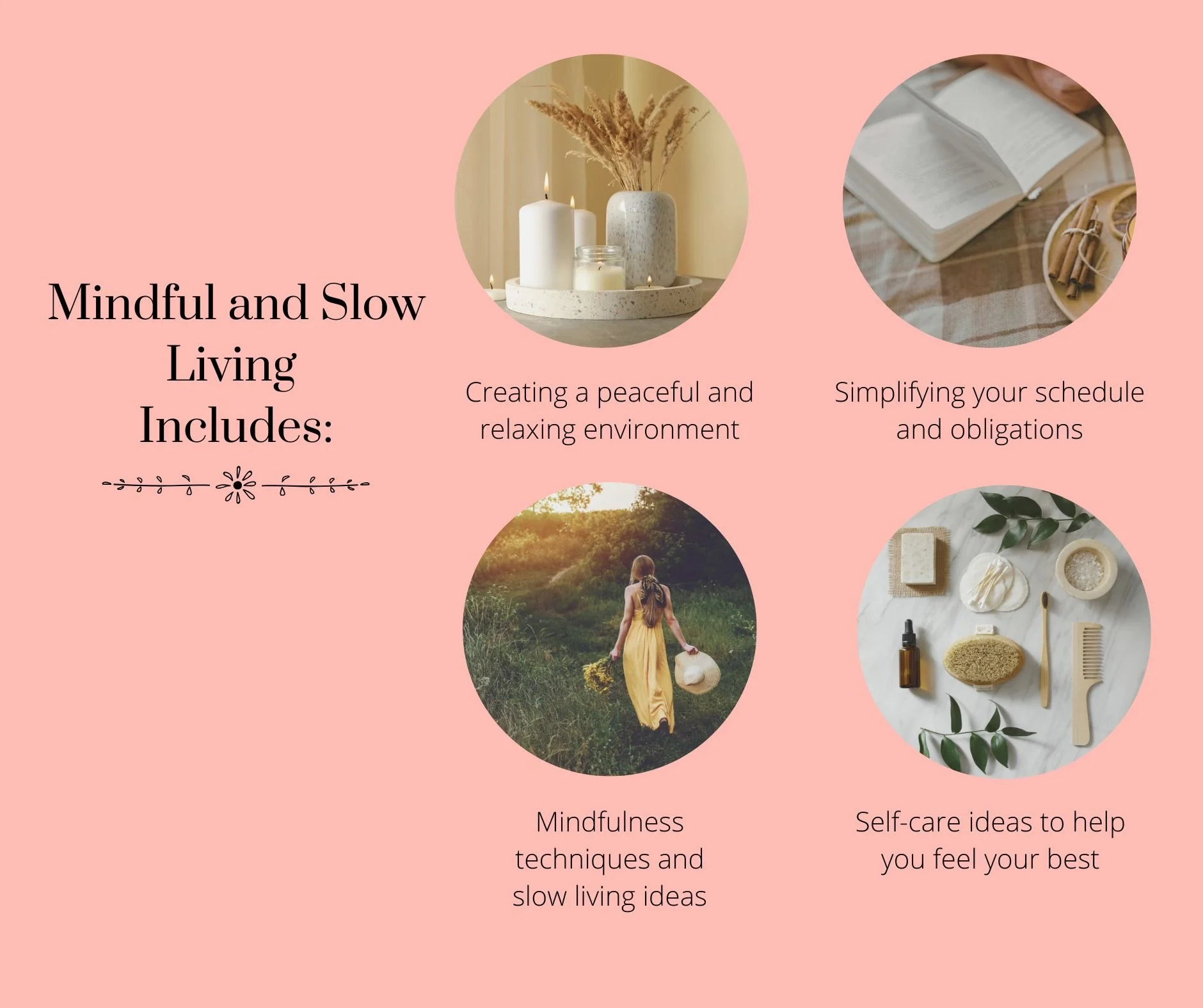
Mindful Living: A Four-Phase Framework for Lasting Change
This work is not about temporary fixes—it’s about creating sustainable change that supports your unique neurology long-term.
I guide you through a four-phase process designed to help you move from overwhelm and constant mental noise to clarity, calm, and a more grounded way of living. Each stage builds on the next, creating a foundation that supports both your internal and external world.
Creating a Peaceful Environment
Simplifying Your Life
Integrating Mindfulness and Slow Living Practices
Restorative Self-Care
These four components are interconnected and work together to create a lifestyle that reduces stress, increases your well-being, and helps you enjoy life more.
Creating a Peaceful Environment
Organizing and decluttering the spaces in your home and in your mind, and creating inviting spaces that you love
We begin with your environment—because it’s influencing your sensory processing every single day.
Together, we organize and declutter your space in a way that feels supportive and low-friction, not restrictive or rule-bound. This isn’t about aesthetic perfection—it’s about creating an environment that honors object permanence, reduces visual clutter, and aligns with how your brain naturally flows.
As physical chaos is removed, mental clutter begins to quiet as well. Your space becomes somewhere you can actually relax in, focus in, and enjoy being in without your brain tracking unfinished tasks.
Instead of walking into a room and immediately experiencing sensory overload or thinking about what needs to be fixed, you begin to feel a genuine sense of ease.
Simplifying Your Life
Simplifying your schedule and obligations
Once your environment feels more supportive, we turn to your time, commitments, and daily rhythms.
You begin to simplify your schedule by identifying what’s essential—and what’s simply adding unnecessary pressure and demand avoidance. This includes setting firm boundaries, restructuring friction-filled routines, or letting go of obligations that no longer align with your real energetic capacity.
With fewer demands pulling at your attention, you create space for what actually matters—your deep-focus work, your relationships, and time for yourself.
Life begins to feel more manageable, more intentional, and far less overwhelming to track.
Integrating Mindfulness and Slow Living Practices
Some basic mindfulness techniques and slow living ideas to help you feel grounded and present
With more space created, we begin to integrate practices that help you feel centered and fully present without forcing a restless mind to sit still.
These are not time-consuming or complicated—they’re simple, kinetic, and sensory-focused ways to bring awareness into your daily life. Whether it’s sensory grounding, slowing down during routine activities, or creating small moments of intentional pause throughout your day, these practices help regulate your nervous system and bring a sense of steadiness.
Over time, this shifts how you experience your life. You’re no longer constantly rushing or reacting to stress—you’re present, aware, and able to move through your day with greater ease.
Restorative Self-Care
Calming self-care ideas to help you feel refreshed and enable you to show up the best for yourself and others
Finally, we focus on self-care in a way that is truly supportive for an ADHD nervous system—not performative, rigid, or inconsistent.
You’ll identify dopamine-rich practices that genuinely help you feel grounded, replenished, and clear. This might include quiet time alone, rhythmic movement, creative outlets, or simple rituals that help you reset after an overstimulating day.
The goal is not to add more overwhelming tasks to your to-do list, but to ensure that your life includes what your specific brain needs to feel well.
When self-care becomes consistent, shame-free, and aligned with your neurology, you show up differently—not just for yourself, but in every area of your life.
Are you ready to transform your life and embrace a more mindful and intentional lifestyle built for your unique brain? Sign up today, and discover the art of living in the present moment while reducing stress and reclaiming time for what truly matters. Let neuro-affirming mindfulness lead the way to a more harmonious and balanced life.
-
Is this home organization coaching?
Not in the traditional sense. While your environment is part of the work, the deeper focus is creating a calmer, more supportive lifestyle that reduces overstimulation and supports your well-being.
What is slow living?
Slow living is the practice of creating a more intentional and sustainable pace of life. It’s not about doing everything slowly—it’s about removing unnecessary pressure and creating more space for presence, calm, and clarity.
What if my life feels too busy to slow down?
This work is designed specifically for those who feel overwhelmed by constant demands and mental overload. The goal is not perfection—it’s creating more ease and support within your real life.
Will this help with stress and overwhelm?
Many experience greater calm, clarity, and emotional steadiness as they simplify their environments, routines, schedules, and daily responsibilities.
Ready to Begin?
To maintain a high-touch, premium experience for every client, I only open a strictly limited number of private coaching slots at one time.
Submit Your Inquiry: Reach out through my contact form to share your initial interest in working together.
Review & Reflect: I will personally respond via email with a brief intake questionnaire to understand your current bottlenecks and verify your preferred tier.
Select Your Time: Once I receive your replies, I will review your details and email you a selection of available times to book our initial strategy call.